
Concrete Slab & Foundation Work
The foundation under your building is the most important part of the whole structure — we get it right so everything built on top of it holds up for decades.
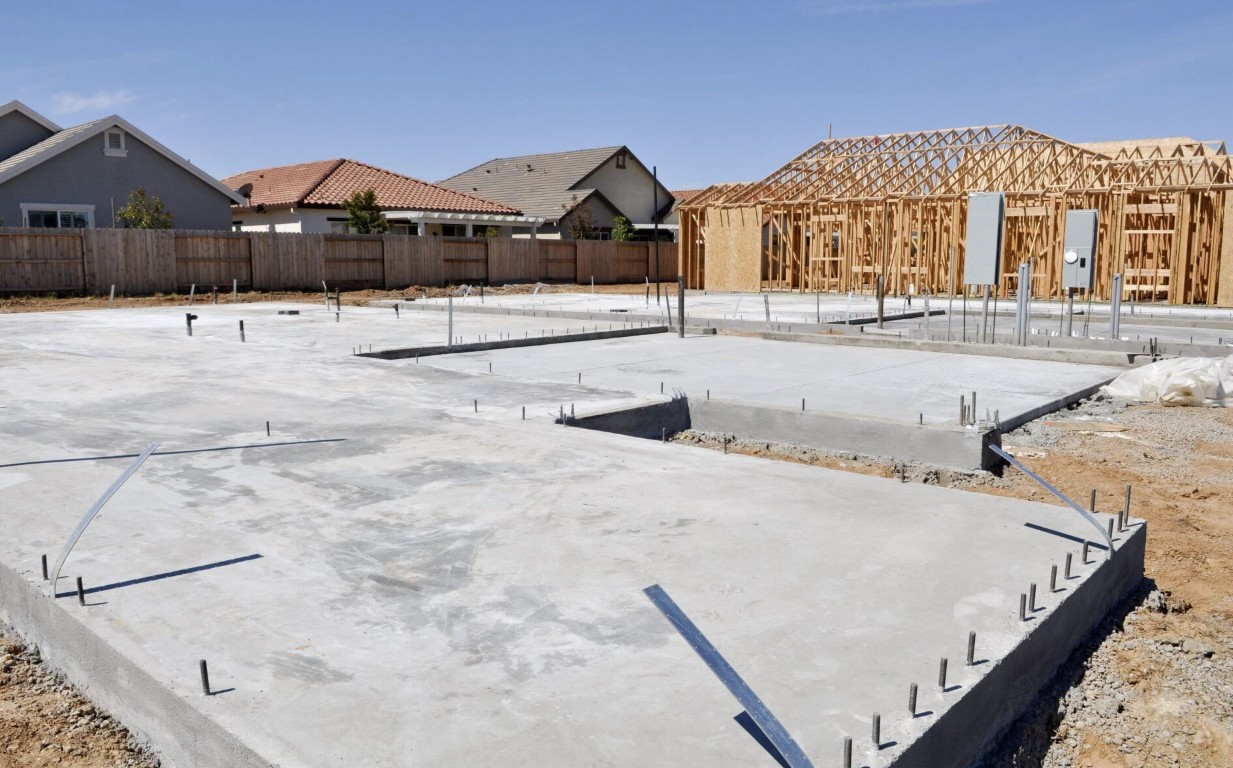
Why Getting the Foundation Right Matters More Than Anything Else
Every wall, roof, door, and window in your home or building rests on the foundation. When the foundation is built correctly, it distributes the weight of the structure evenly, stays stable through temperature changes and soil movement, and lasts for the life of the building. When it is not built correctly, everything above it eventually shows the problem — sticking doors, sloping floors, cracks in the walls, and in serious cases, structural failures that cost far more to fix than the original build would have.
In Surprise, AZ, we deal with expansive clay soils that swell and shrink with moisture changes, and with caliche layers that can affect drainage and bearing capacity. Building a slab or foundation here without understanding the local soil is a recipe for problems. Our team at Prime Surprise Concrete Company has direct experience with the ground conditions in this area, and we build accordingly.
For a full overview of our residential and commercial concrete work, visit our concrete contractor home page.
Types of Slab and Foundation Work We Do
We handle a wide range of slab and foundation projects for both residential and commercial clients throughout the West Valley. Here is what we work on:
- Residential monolithic slab foundations for new home construction
- Stem wall foundations with separate footings and interior slabs
- Garage slabs and workshop floors
- Shed, outbuilding, and accessory structure foundations
- Addition slabs for room additions, sunrooms, and home expansions
- Equipment pads for HVAC units, generators, and industrial machinery
- Commercial building foundations and warehouse floor slabs
- Slab repair and patching for existing settled or cracked foundations
For buildings where the existing slab has started to settle or crack structurally, our concrete leveling service can lift and stabilize sunken sections without a full replacement in many cases.
What Goes Into Building a Quality Concrete Slab
A slab that lasts is the product of careful preparation at every stage. Skipping steps here is how you end up with cracking, settling, and costly repairs down the road. Here is what we include in every slab and foundation project:
Soil Assessment and Grading
We check the soil bearing capacity, grade the site for proper drainage, and identify any soft or unstable spots that need to be addressed before any concrete is placed.
Sub-Base Compaction
We compact the sub-base in lifts to eliminate voids and create a stable platform. This is the step most responsible for preventing future settling.
Vapor Barrier Placement
Where required, we install a vapor barrier beneath the slab to protect against moisture transmission from the soil, especially important for interior living spaces.
Rebar and Post-Tension Cables
We place steel reinforcement per the structural requirements — either rebar grids or post-tension cable layouts depending on the design specifications for your project.
Once the slab is poured, the concrete is finished and cured properly to reach its designed strength. For projects that also need concrete steps and stairs, we build those as part of the same scope so everything ties together correctly.
Slab and Foundation Questions We Hear Often
Here are straightforward answers to the questions homeowners and contractors in Surprise, AZ most often ask us about slab and foundation work.
Start Your Project on Solid Ground
Whether you are building new or dealing with an existing slab issue, we give you honest answers and quality work. Call us for a free consultation.
Call (623) 777-8831Prime Surprise Concrete Company — 14600 W Greenway Rd, Surprise, AZ 85379