
Loading...
Serving Surprise, AZ and surrounding areas. (623) 777-8831
Prime Surprise Concrete Company handles foundation installation, driveways, patios, and concrete slabs for Prescott Valley homeowners. We understand the elevated climate, local soil conditions, and permit process in this market, and we respond to every inquiry within one business day.
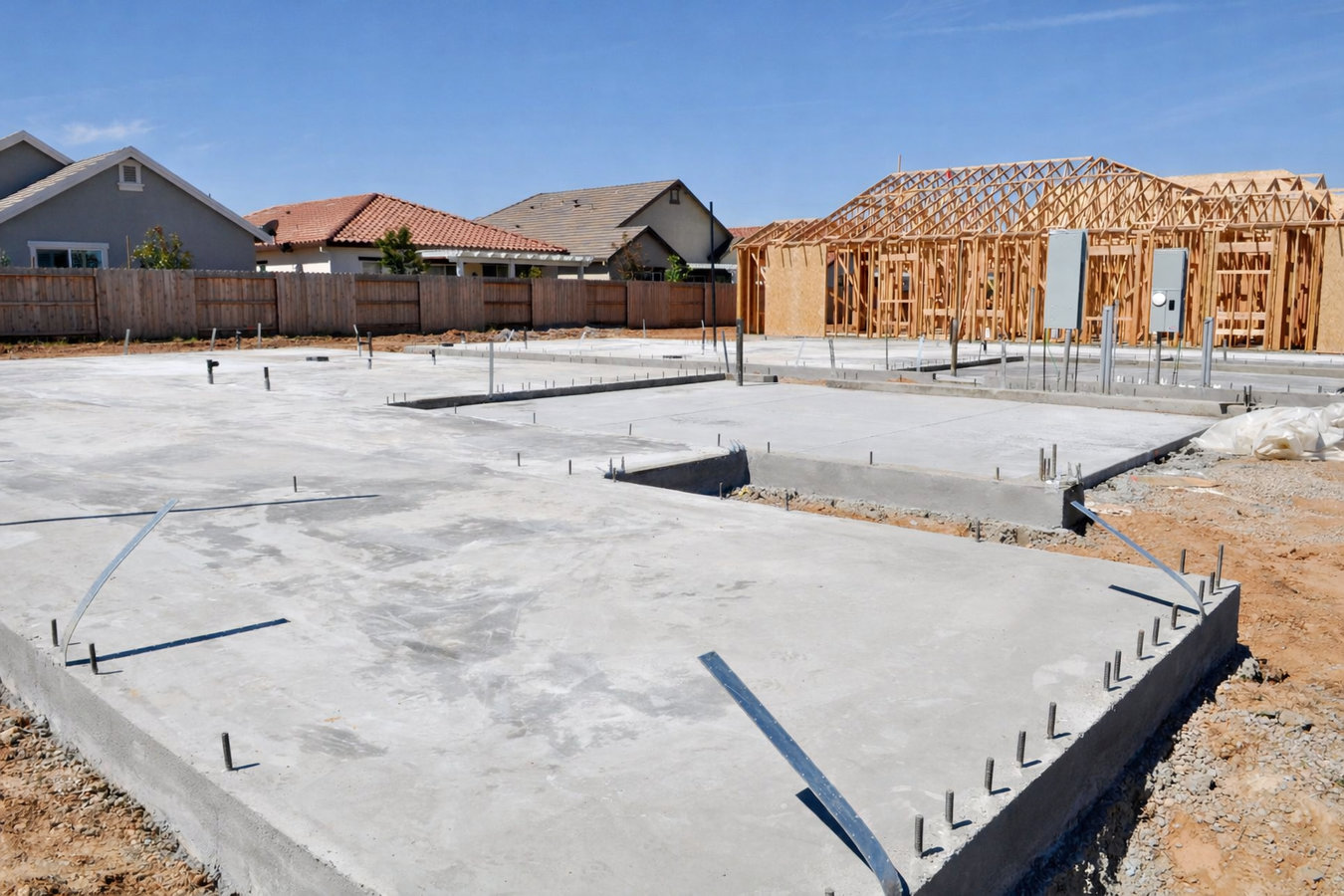
Prescott Valley homeowners adding detached structures, workshop buildings, or room additions need a foundation designed for the local soil and climate - including the freeze-thaw cycles that low-elevation Arizona cities never deal with. We pour foundations with the reinforcement depth, concrete mix design, and subbase preparation appropriate for this high-desert environment. See how our foundation installation process works, including what we evaluate during the site assessment.
Prescott Valley driveways face stresses that are different from the Phoenix metro. Winter freeze-thaw cycles crack concrete that was not poured with adequate thickness and proper mix design for sub-freezing temperatures. Summer UV and monsoon moisture add to the load. We build driveways with the slab thickness and joint placement that handle both the winter cold and the summer heat this area experiences.
Prescott Valley patios see use from spring through fall, and the outdoor living season here is comfortable on both ends because of the elevation. We pour patio slabs with proper drainage slope to shed the monsoon rain that arrives in July and August, and with the slab thickness that handles the occasional overnight freeze in November through February without cracking the surface.
Prescott Valley has more terrain variation than most Phoenix metro cities, and sloped lots near the Glassford Hill area and other elevated sections of town often need retaining walls to manage grade changes and hold soil during heavy monsoon rain. Concrete retaining walls in clay-bearing soils need proper drainage behind the wall to prevent water pressure from building against the face and causing premature failure.
New construction in Prescott Valley - whether a primary residence, an accessory structure, or a detached garage - requires a slab designed for the local soil profile. Clay-heavy soils common in parts of the town expand and contract with moisture, and a slab that was not properly prepared before the pour will show movement within the first full year of monsoon and freeze-thaw cycling.
Front walks and sidewalk sections in Prescott Valley neighborhoods see both summer UV exposure and winter frost, a combination that degrades concrete surfaces faster than either factor alone. Cracked or heaved sidewalk panels are a tripping hazard and a property liability. We remove damaged sections and pour replacements that integrate with the existing grade and meet local standards for finish and thickness.
Prescott Valley is one of the fastest-growing towns in Arizona, and most of its housing was built from the 1980s onward, with a significant wave of development happening in the 2000s. That means the concrete on many properties - driveways, patios, and walkways - is now old enough to show the effects of the high-desert climate. At 5,100 feet elevation, Prescott Valley experiences temperature extremes that are fundamentally different from the Phoenix metro: winter nights regularly drop below freezing from November through March, and summer afternoons climb well above 90 degrees Fahrenheit. That range - roughly a 130-degree annual swing - puts stress on concrete that was not designed for it. Original builder-grade flatwork from the early 2000s, poured to minimum standards, is now cracking, heaving, and reaching the end of its service life across the town.
The soil in Prescott Valley also presents challenges that require attention before any pour. Parts of the town sit on decomposed granite that drains well but requires proper compaction to serve as a stable base. Other neighborhoods have clay-heavy soil that expands when wet and shrinks when dry - the same mechanism that causes concrete failures in Phoenix, just compounded by the freeze-thaw cycle that clay soils experience when winter temperatures dip below freezing. A contractor from the Phoenix market who has not worked at elevation needs to understand these differences before pouring concrete in Prescott Valley. We do.
Our crew works in Prescott Valley and understands what distinguishes concrete work here from our Phoenix metro projects. For permitted projects, we coordinate with the Town of Prescott Valley Community Development department and are familiar with the local inspection requirements so permits move through without unnecessary delays.
Prescott Valley is a town with a distinct character shaped by its mountain setting and its position as a hub for the Prescott metro area. The older neighborhoods near the Glassford Hill area and along Navajo Drive have a different housing age profile than the newer communities being built out along Highway 89A toward Prescott proper. Residents here are often relocating from the Phoenix metro and expect the same quality of work - but the concrete work itself requires adjustments for the elevation, the soil, and the seasonal temperature range. We bring that understanding to every job in Prescott Valley.
Many of our Prescott Valley customers also have properties or family near Surprise, AZ in the Phoenix metro, and we serve concrete projects across that geography without any extra scheduling complications. Whether the project is in the high desert or the Valley, the same crew, the same standards, and the same commitment to getting the ground preparation right apply.
We respond within one business day. Call directly or submit an online request and a real person gets back to you. We ask about the project scope and schedule a site visit.
We visit your property, evaluate the soil conditions, measure the work area, and give you a written estimate that breaks down every line item - demolition, base work, materials, labor, and permit fees.
Where the Town of Prescott Valley requires a permit, we submit the application and coordinate the required inspections before any concrete is poured. No skipped steps that create problems down the road.
Our crew arrives on the confirmed date, prepares the ground to the depth and standard the soil requires, pours during the best part of the day for the season, and walks through the finished work with you.
We respond within one business day. No obligation to hire after submitting. Someone from our office will call to schedule a free on-site estimate at a time that works for you.
(623) 777-8831Call us or send a message. We will get back to you within one business day with a written estimate and a straight answer.